Hand wash vs tunnel car wash: what's the real difference?
Short answer
A careful hand wash touches the paint only with clean microfiber and lifts dirt away. A tunnel's brushes or cloth strips drag grit from earlier cars across your paint and leave swirls. Hand washing is best. A touchless wash is next best. Avoid brush and friction washes altogether.
Quick facts
| Best option | A careful hand wash |
|---|---|
| Next best | A touchless wash |
| Avoid | Brush, cloth and other friction washes |
| How often | Every two weeks if possible, monthly at a minimum |
What actually happens in a tunnel wash?
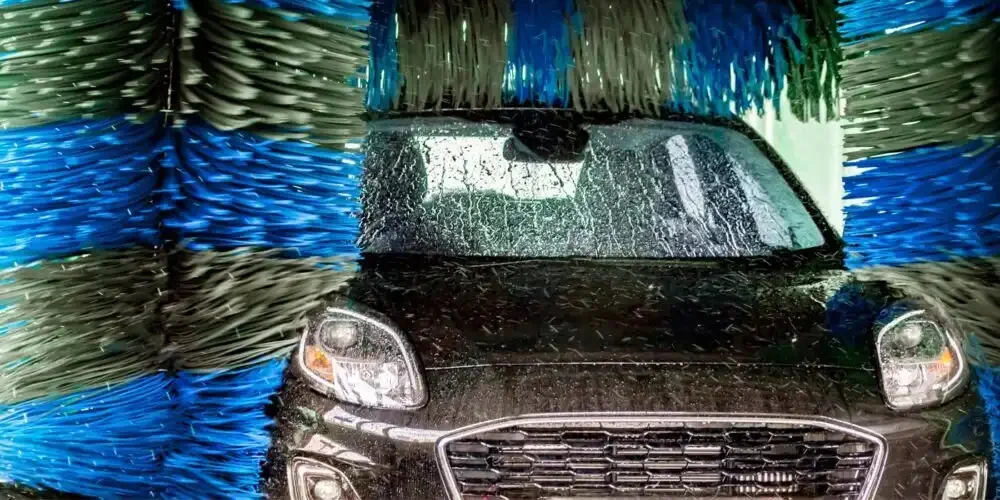
A tunnel wash is built for speed. Spinning brushes or hanging cloth strips slap against car after car all day. They pick up sand, road grit and brake dust from every vehicle ahead of yours, then rub that grit across your paint.
Think of drying your face with a towel someone just used to wipe down a muddy bike. The towel might feel soft, but what's trapped in it does the damage.
What does a careful hand wash do differently?
A good hand wash uses plenty of lubrication and clean microfiber, and it lifts dirt away from the paint instead of grinding it in. Towels are swapped or cleaned as they get dirty, so the grit from the lower doors never ends up on the hood.
It also means a person is looking at the car up close, panel by panel, and can treat spots like bird droppings or sap gently instead of hoping a brush knocks them off.
Is a touchless wash a good compromise?
Yes. A touchless wash uses stronger soap and high-pressure water and never physically touches the paint, so it can't drag grit around. It usually won't remove all of the oily film that freeway driving leaves behind (see commuter road film), but it is far safer than a brush wash and a fine choice between hand washes.
Why do brush washes leave swirls?
Every pass of a dirty brush leaves tiny scratches in the clear coat. One wash won't ruin a car, but hundreds of them build up into the spiderweb look you see on dark cars under parking garage lights or in the sun. Removing that takes paint correction, which is far more work than avoiding it.
At APC Auto Spa
The APC Hand Wash takes about 2 hours at the Tukwila shop. APC washes by hand with soap and water from a pump sprayer and a snake wipe method, no bucket and no hose rinse, which is environmentally friendly and uses a fraction of the water. Because of that method, APC does not clean the undercarriage. The APC Hand Wash also cleans the door jambs, wheel faces and barrels, exhaust tips and windows inside and out, tops off the windshield washer fluid, adds tire dressing if you want it, and includes the complimentary vacuum of the cabin and wipe-down of the driver's area that comes with every APC service.
APC's advice for every vehicle is the same: hand wash is best, touchless is next best, every two weeks if possible and monthly at a minimum, and never brush or friction washes. Pricing is on APC Auto Spa's detailing page.
Frequently asked questions
- Are soft cloth tunnel washes safer than brush washes?
- Not really. Soft cloth still touches car after car and can hold grit from earlier vehicles. Any wash that rubs the paint with shared material can leave swirls.
- Is a touchless wash bad for my paint?
- No. A touchless wash is the next best choice after a hand wash. It may not remove every bit of road film, but it does not drag grit across the paint.
- Does APC clean the undercarriage?
- No. APC hand washes with soap and water from a pump sprayer and a snake wipe method, with no bucket and no hose rinse. That uses a fraction of the water, so the undercarriage is not cleaned.
Reviewed by Heather Humphrey, co-owner of APC Auto Spa · Last updated October 2026
Heather has co-owned APC Auto Spa since 2015 and is trained in every service APC offers.