No hose, no driveway: is a waterless or rinseless wash safe, and how do you keep a car clean without washing at home?
Short answer
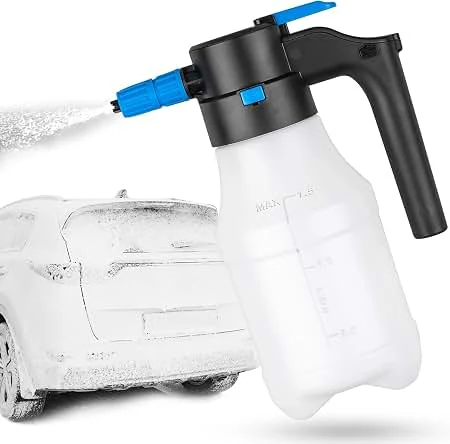
Yes, a rinseless or waterless wash is safe if you use plenty of product and clean microfiber towels and the car isn't caked in mud. APC's own version uses soap and water from a pump sprayer and a snake wipe method, with no bucket and no hose rinse. If washing at home isn't practical, a membership with regular professional hand washes is the easiest way to keep up.
Quick facts
| Needs a hose? | No |
|---|---|
| Safe when | Plenty of product, clean microfiber, not caked in mud |
| Rinseless | One bucket of solution, no final rinse |
| Waterless | Spray on, wipe off, panel by panel |
| APC's method | Soap and water from a pump sprayer, snake wipe method, no bucket |
What's the difference between rinseless and waterless?
A rinseless wash uses a bucket of diluted solution and microfiber towels. You wash a panel, then dry it, with no hose rinse at the end. A waterless wash is a spray: mist a panel, gently wipe, then buff dry. Rinseless suits a moderately dirty car. Waterless suits light dust and touch-ups. APC's own method is a little different: soap and water from a pump sprayer, wiped panel by panel with a careful snake wipe method, so no bucket is needed.
How can it be safe without rinsing the dirt off first?
The products are made with lubricants that surround dirt and lift it off the surface, so the towel glides instead of grinding. The trick is technique: use lots of product, work one panel at a time, fold the towel to a clean side often, and never press hard. It's similar to how you would clean a pair of glasses: a drop of cleaner and a clean cloth, not a dry shirt.
When is it not a good idea?
If the car is covered in thick mud, sand or winter grime, there's too much grit to safely lift with a towel. That's when a touchless wash or a professional wash is the better first step.
What if I'd rather not wash it myself?
That's normal in the city, where garages, street parking and building rules make washing at home hard. Regular professional hand washes on a schedule are the simplest way to keep up. A touchless wash between visits is a fine backup. Avoid brush washes.
At APC Auto Spa
APC hand washes every car with soap and water applied from a pump sprayer, then wipes each panel with a snake wipe method. The snake wipe works like wiping crumbs off a kitchen counter: the towel gathers the dirt and carries it off the panel instead of rubbing it around. No bucket and no hose rinse. It's environmentally friendly and uses a fraction of the water. The APC Hand Wash takes about 2 hours. Because there is no hose rinse, APC does not clean the undercarriage.
For apartment and condo drivers, a Care membership is the easy route: tiers range from a couple of hand washes a year up to 11 a year, plus a yearly decontamination wash credit. Washes are earned through monthly payments, starting with the second payment, and each wash credit expires when the next one comes due. One membership per vehicle.
Frequently asked questions
- Can a waterless wash scratch my paint?
- It can if it is done with too little product, dirty towels or on a very dirty car. Done properly, with plenty of product and clean microfiber, it is safe.
- Can I do a rinseless wash in a parking garage?
- It only needs a bucket and towels, so it is practical in many garages. Check your building's rules first.
- Does APC use a pressure washer?
- No. APC applies soap and water with a pump sprayer and wipes each panel with a snake wipe method, which uses a fraction of the water. Because there's no hose rinse, the undercarriage isn't cleaned.
Reviewed by Heather Humphrey, co-owner of APC Auto Spa · Last updated October 2026
Heather has co-owned APC Auto Spa since 2015 and is trained in every service APC offers.